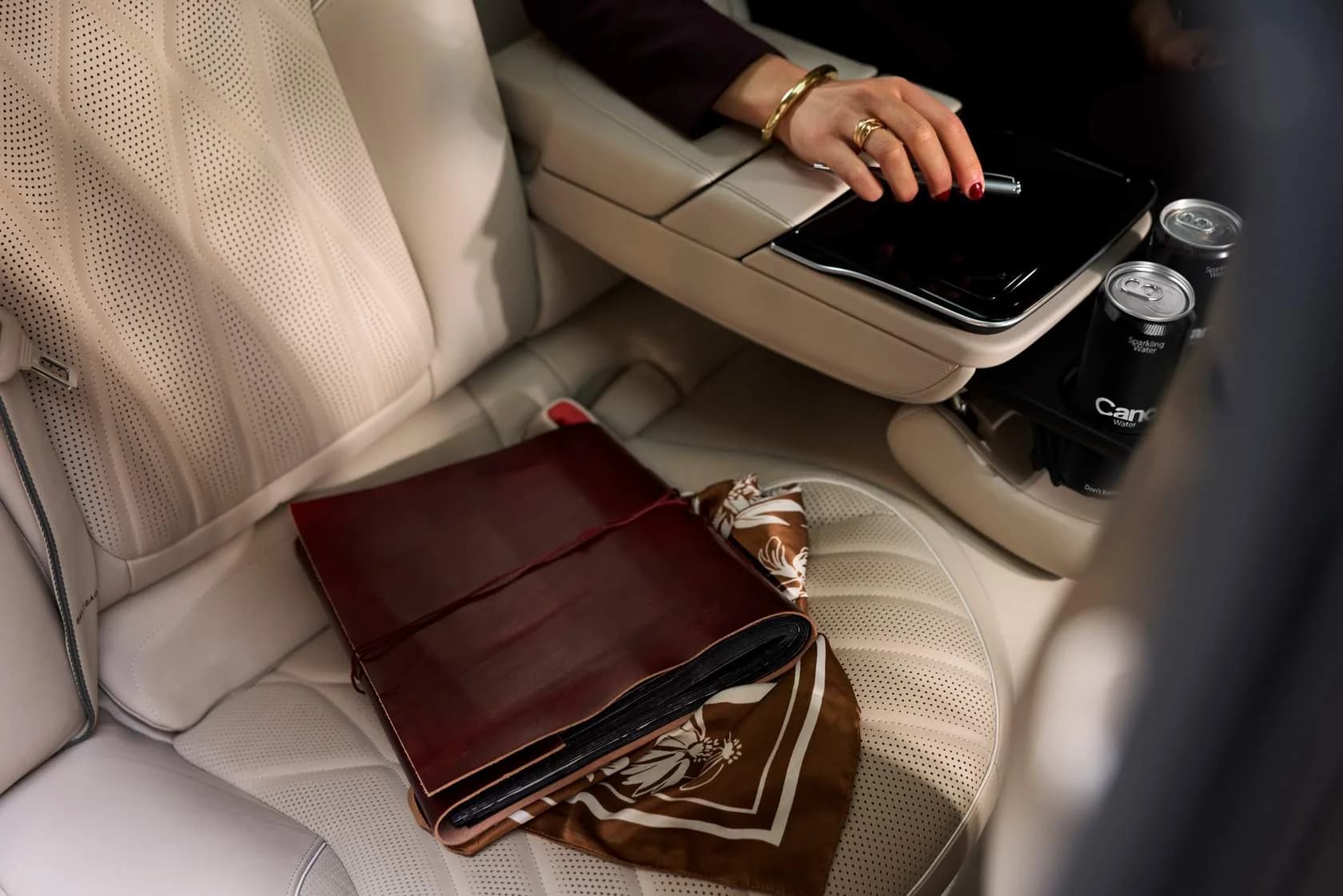
Wedding Transfer in Antalya: Bridal Car, Guest Transport, and Destination Wedding Venue Planning
Antalya has become one of the Mediterranean's most sought-after destination wedding regions, and for good reason. Turquoise coastline, dependable summer sun, five-star resort venues, ancient ruins as a backdrop, and a price point that still allows for real luxury — it is easy to see why couples from the UK, Germany, Scandinavia, the Gulf, and Eastern Europe keep choosing Antalya over the more crowded (and more expensive) wedding destinations of the western Mediterranean.
What almost nobody plans for early enough is transport. Not because it is complicated in the way that venue selection or catering is complicated, but because it is logistically dense in a way that surprises first-time destination wedding planners. A single wedding weekend in the Antalya region can involve dozens of arriving flights spread across three or four days, a bridal car that has to hit an exact fifteen-minute window, a fleet of vehicles shuttling eighty guests between a hotel and a venue twice in one evening, and a final late-night run home for guests who are in no state to coordinate their own transport. Get it right and nobody notices. Get it wrong and it is the one thing every guest remembers about the trip.
This guide walks through every layer of wedding transport planning in Antalya — from the first arriving guest to the last departure a week later — with the level of operational detail that a wedding planner, mother of the bride, or couple actually needs when building a transport plan rather than just booking a single airport transfer.
Why Destination Weddings in Antalya Need Dedicated Transport Planning
A domestic wedding usually has one transport problem: getting the wedding party from the ceremony to the reception. A destination wedding in Antalya has that problem plus four or five more layered on top of it, because every single guest also has to get into the country, across the city or coastline, and back out again.
Consider what a typical three-day Antalya wedding weekend actually looks like from a transport perspective. Guests arrive on at least two, often three, different days, on flights from four or five different countries, landing at different terminals and different times of day — including several arriving well after midnight, since long-haul and connecting flights into Antalya Airport frequently land late. The wedding party needs to be somewhere specific, dressed, and photograph-ready at an exact moment, with zero tolerance for the kind of delay that a generic airport pickup can shrug off. Guests need to move between the hotel and the ceremony venue, then between the ceremony venue and the reception venue if they are different locations, then back to the hotel — sometimes twice in one evening if there is a welcome event the night before. And at the end of the night, forty tired, well-fed, and probably well-toasted guests all need to get home safely, all at roughly the same time, with a driver who has the patience for a slow, careful late-night boarding process.
None of this works with an ad hoc approach of guests booking their own taxis or renting cars individually. It requires one transport plan, built around the wedding programme, coordinated by one point of contact, and executed by drivers who understand that a wedding weekend is not a series of unrelated airport runs — it is one continuous operation with a fixed, unmovable deadline at its centre: the ceremony start time.
This is also why per-vehicle private transfer planning works fundamentally differently from the way most people first think about wedding transport. A private transfer service prices and dispatches a specific vehicle for a specific group and a specific job, whereas a shared shuttle service pools unrelated passengers together on a fixed route and schedule that has no relationship to your wedding timeline at all. For a wedding, where every minute of the programme has already been negotiated with the venue, the caterer, and the photographer, a shared shuttle's unpredictable stops and shared capacity are not a viable option. Every vehicle in a wedding transport plan needs to be dedicated to your event and answerable to your schedule.
Guest Logistics: Getting Everyone There Across Multiple Arrival Days
The single biggest transport challenge in a destination wedding is rarely the wedding day itself — it is the four or five days before it, when eighty, one hundred, or one hundred fifty guests are converging on Antalya from different countries at different times.
Mapping the Arrival Wave
The first real task for anyone planning wedding transport is building an arrival manifest: every guest, their flight number, arrival date, arrival time, terminal, and group size (are they arriving alone, as a couple, or as a family of five with car seats needed). This sounds like an administrative chore, but it is the single most important document in the entire transport plan, because it determines everything downstream — how many vehicles are needed on which days, whether a group minibus makes sense for a particular time slot, and where the pinch points are going to be.
In practice, arrivals cluster. Most guests will land in a two-day window before the wedding, with a smaller secondary group arriving for a longer stay and a handful of stragglers trickling in on the wedding day itself (never ideal, but it happens). Antalya Airport handles a high volume of European charter and scheduled traffic in the same afternoon and evening windows during peak wedding season (May through October), so the practical reality is that even well-organised weddings end up with overlapping arrival slots that need careful vehicle allocation.
Group Minibus vs. Individual Private Cars
Once the arrival manifest exists, the next decision is which arrivals get grouped into a minibus or sprinter and which get an individual private car.
As a rule of thumb: if six or more guests land within roughly a ninety-minute window and are all heading to the same hotel or resort, a group private transfer with a minibus or sprinter is more efficient, more sociable (guests who don't know each other yet start chatting on the way to the resort — a nice, unplanned icebreaker before the wedding), and considerably simpler to coordinate than dispatching individual sedans for the same group. It also means one meeting point, one driver, one name board, rather than six separate pickups happening in parallel across the arrivals hall.
Where arrivals are scattered — a couple landing at 6:40am, a family of four at 11:15pm, a solo guest connecting through a delayed flight — individual private cars make more sense. Trying to force scattered arrivals into artificial minibus groupings usually means guests waiting around the airport for an hour or more for other passengers to land, which is a poor first impression for people who have just flown five or more hours to attend a wedding.
For mid-sized clusters — extended family groups, a groomsman party arriving together, a set of eight to twelve guests on the same flight — a group minibus airport transfer built for family reunions and wedding groups sits in the sweet spot between the flexibility of a private car and the efficiency of a full coach, and a similarly sized option exists specifically scoped for minivan and minibus transfers for 5 to 19 passengers, which covers most wedding party and extended family groupings without over- or under-provisioning seats.
The Airport Welcome Desk
For weddings with sixty or more guests arriving across multiple days, it is worth setting up a dedicated welcome point inside or just outside the arrivals hall — effectively a small desk or a clearly branded meeting spot staffed by someone who knows the full guest list and the full vehicle schedule for that day. This person's job is simple but valuable: greet guests by name, confirm which vehicle they're assigned to, hand out a short welcome note or itinerary card if the couple wants one, and radio ahead if a flight has landed early or is running behind so the assigned driver can adjust.
This is a small addition to the transport budget that pays for itself many times over in reduced stress, because it means no guest is ever standing alone in an unfamiliar airport wondering if their car is coming.
Name Boards and Recognition
Every arriving guest or guest group should be met with a clearly printed name board — ideally with the couple's names or a short wedding reference on it as well as the guest surname, so that even a first-time flyer to Turkey who has never used a private transfer service before immediately recognises which board is theirs. For larger groups, colour-coding name boards by arrival wave or by which resort they're staying at is a simple trick that removes a surprising amount of confusion at a busy airport exit.
Flight Tracking for Delays and Reroutes
Every driver assigned to a wedding guest pickup should have the flight number logged in advance, not just an estimated arrival time. Flights get delayed, and during the Eastern Mediterranean's peak summer traffic, they occasionally get diverted to a different airport entirely when Antalya is running at capacity. A transport partner that tracks flights in real time can quietly adjust a driver's dispatch time without anyone having to phone in a change, and can flag a diversion early enough that the couple's point of contact can react before a confused guest lands somewhere unexpected and has no idea what to do next. This single piece of operational infrastructure — live flight tracking tied to driver dispatch — is what separates a wedding transport plan that runs itself from one that requires the best man to be checking flight boards on his phone during his own toast rehearsal.
The Bridal Car: Getting the Details Right
The bridal car is the one vehicle in the entire wedding transport plan that has zero margin for error. Every other vehicle can absorb a ten-minute delay without anyone particularly noticing. The bridal car cannot — photographers are waiting, the officiant has a schedule, and in many Antalya venues the ceremony slot itself is time-boxed because the venue is turning the space around for another event.
Vehicle Options
| Vehicle Type | Typical Capacity | Best For | Notes |
|---|---|---|---|
| Sedan (E-Class) | 1–3 passengers + luggage | Bride + one parent, groom's arrival | Easiest for narrow driveways, elegant, understated |
| S-Class / Maybach | 1–3 passengers + luggage | Statement bridal arrival, dramatic photography | Longer wheelbase, more rear legroom for gowns |
| SUV | 1–4 passengers + luggage | Uneven or unpaved venue access, tall headpieces | Higher ground clearance, more headroom |
| Minivan (5–8 pax) | Bridal party of 4–7 | Bridesmaids/groomsmen travelling together | Keeps the party together, one coordinated arrival |
| Minibus / Sprinter (9–19 pax) | Full bridal party + family | Multi-generational family group arriving as one unit | One dispatch point, one driver briefed on timing |
| Coach (20+ pax) | Large guest waves | Hotel-to-venue shuttle waves, not bridal transport | Reserved for guest logistics, not the couple's own car |
Decoration Rules and What's Actually Allowed
Couples often want to decorate the bridal car — ribbons on the wing mirrors, flowers across the bonnet, a "Just Married" sign for the departure. Most of this is fine, but it needs to be agreed with the transport provider in advance rather than assumed. As a general guide: magnetic or ribbon-tied decorations that don't use adhesive directly on paintwork are almost always acceptable; anything involving tape, glue, or attachment through the bodywork is not, because it risks damaging a vehicle that also needs to be turned around for other clients. Flowers and ribbon inside the car (on headrests, door handles) are usually fine as long as they're removed before the next booking. Always confirm decoration plans directly with the transport company rather than the venue or florist, since the florist may not know what the vehicle can safely accommodate.
Timing Buffers Before the Ceremony
Build in more buffer than feels necessary. The rule of thumb worth following: calculate the drive time from the getting-ready location to the venue, then add a fixed thirty-minute buffer on top for photography stops, unexpected road works, or simply the bride needing an extra few minutes before stepping out of the car. This buffer is not the same as being early to the ceremony — it means the bridal car arrives with enough spare time that a planned five-minute "arrival shot" at the venue gate doesn't eat into the ceremony start time.
For weddings where the getting-ready location and the ceremony venue are more than 30–40 minutes apart (common when the bridal party is staying in central Antalya or Belek but the ceremony is in a more remote spot like Kaş or a countryside estate near Kemer), it's worth doing a full timed test drive at the same time of day, a day or two before the wedding, purely to confirm real-world drive time against summer traffic rather than a map estimate.
Coordinating With the Photographer and Videographer
The bridal car is not just transport — it is a photography set piece. The photographer and videographer need to know, in advance, the make and colour of the car, the exact route if a scenic detour is planned for photos, and the precise arrival time so they can be positioned before the car pulls in rather than scrambling as it arrives. It is worth putting the driver directly in a small coordination group chat with the photographer and the wedding planner for the day itself, so that a two-minute delay for a perfect photo doesn't cascade into a missed ceremony slot without anyone downstream knowing why.
Shuttle Waves Between Hotel and Venue
For any wedding where guests are staying at a hotel or resort that is not the ceremony venue itself, the hotel-to-venue movement is the highest-traffic logistics event of the entire weekend, and it needs to be planned in waves rather than as a single mass departure.
Planning your trip?
Enter your exact route and vehicle type to see the current booking price before confirmation.
Staggering Departure Times
Trying to move eighty guests from a hotel lobby to a fleet of vehicles all at the same moment creates exactly the bottleneck you'd expect: a crowded lobby, confused guests unsure which vehicle is theirs, and a departure that runs fifteen or twenty minutes late before a single wheel has turned. The better approach is staggered waves — for example, splitting eighty guests into three waves of roughly twenty-five to thirty, departing at ten-minute intervals, each wave assigned to specific vehicles with a lobby coordinator checking names off a list as each wave boards.
This has a second benefit beyond avoiding a lobby crush: it means the first wave arrives at the venue with enough of a head start to be seated and settled by the time the ceremony begins, rather than the venue's own arrival area becoming its own bottleneck as multiple sprinters unload at once.
Avoiding Return-Trip Bottlenecks
The mirror image of the arrival bottleneck happens at the end of the reception, when a large number of guests all decide they're ready to leave within the same twenty-minute window. This is best solved before the wedding, not during it, by pre-agreeing a return schedule with the transport provider: a first return wave at a set time for guests with children or older relatives who tire earlier, a main return wave when the dancing naturally starts to wind down, and — critically — a standby capacity for the guests who stay until the very end.
Practical Wave Planning
A useful reference for building the wave schedule is the same vehicle mix used for guest logistics — a combination of a large-capacity minibus or sprinter service for the bulk of the guest list and smaller vehicles held in reserve for family groups, elderly guests, or anyone who needs to leave outside the main wave windows.
The Late-Night Return Run: Solving the "Last Guest" Problem
Every wedding planner who has run more than a handful of destination weddings has a story about the last guest problem — the two or three people who are still on the dance floor at 2am, long after the main return waves have gone, with no vehicle left and no plan for how they get back to the hotel.
The fix is straightforward but has to be decided in advance: keep at least one driver and vehicle on standby, parked and ready, from the last scheduled return wave until the venue itself closes or the couple confirms the reception is genuinely over. This standby vehicle should not be the same driver who has been running wave after wave all evening and is now fatigued — ideally it is a fresh driver who comes on specifically for the late shift, briefed on the venue location and given a direct line to the wedding planner or a designated guest contact.
Safety for Guests Who Have Been Drinking
This is worth stating plainly: a wedding reception involves alcohol, and a meaningful share of guests boarding the late-night return run will not be in a state to give clear directions, confirm their own hotel name, or manage their own luggage or belongings. A driver working a wedding's late shift needs more patience than a standard airport run — a slower, more careful boarding process, a willingness to double-check hotel names against a printed guest list rather than relying on a guest's slurred confirmation, and a calm approach to the inevitable minor chaos of a happy, tired wedding party climbing into a van at 1am. This is a meaningfully different skill from a standard point-to-point transfer, and it is worth explicitly confirming with the transport provider that drivers assigned to the late-night wave are experienced with exactly this kind of run.
Elderly Guests and Accessibility
Destination weddings routinely involve at least a handful of guests in their seventies or eighties — grandparents, older relatives — for whom the standard boarding pace of a minibus or sprinter is simply too fast, and for whom step height and door width genuinely matter.
Two things solve most of this. First, identify elderly or mobility-limited guests on the arrival manifest ahead of time and assign them to a vehicle with a lower step-in height and wider door opening rather than defaulting them into the standard group minibus rotation. Second, build extra time into every wave that includes these guests — an extra five minutes at pickup and an extra five at drop-off is a small cost against the transport schedule and a large improvement in how comfortable and unrushed the experience feels for someone who cannot move quickly.
For guests who use a wheelchair or have more significant mobility needs, this should be planned as its own dedicated line item rather than an adjustment to a shared vehicle. A wheelchair-accessible private transfer service with proper ramp or lift access, secure wheelchair anchoring, and a driver trained in safe assisted boarding is the right solution here, and it needs to be booked well in advance — this is not a vehicle type that can be substituted in at short notice.
Children and Child Seats
Family weddings mean family guests, and family guests mean car seats. This is one of the most commonly underestimated parts of wedding transport planning, because it seems like a minor detail until a family of four with two young children arrives at the airport to find a standard sedan with no seats installed.
Every family with children under the applicable seat-requirement age needs to be flagged on the arrival manifest with the children's ages, so the transport provider can pre-install the correct ISOFIX or booster seat before the guest lands — not scramble to find one after the fact. A family-friendly private transfer service built around child seats and spacious vehicles is designed specifically for this, covering infant seats, forward-facing ISOFIX seats for toddlers, and backless boosters for older children, matched to the right vehicle size for the whole family plus luggage and, frequently, a pushchair.
It's also worth thinking about the wedding day itself from a family logistics angle: a family with a toddler is unlikely to stay for the full late-night reception, so their return should be planned as an early, calm, standalone trip rather than folded into a loud, crowded main return wave.
Luggage Handling for Extended-Stay Guests
A meaningful share of destination wedding guests turn the trip into a longer holiday — arriving several days before the wedding and staying a week or more afterwards to enjoy the Turkish coast. This changes the luggage profile significantly: instead of a single carry-on for a two-night stay, transport needs to account for full holiday luggage, sometimes including golf clubs, diving equipment, or oversized items.
This matters for two reasons. First, vehicle selection needs to account for full luggage capacity, not just passenger seat count — a sedan that comfortably seats three people cannot necessarily also swallow three large suitcases plus hand luggage, so the transport plan should size vehicles by luggage volume as well as passenger count for any guest staying more than a few days. Second, if any guests are combining the wedding with golf (Belek's golf resorts are a major draw for exactly this kind of extended trip) or other equipment-heavy activities, this should be flagged specifically — a transfer service built around golf resort travel and golf equipment handles clubs and golf bags properly rather than trying to wedge them into a standard boot.
Planning your trip?
Enter your exact route and vehicle type to see the current booking price before confirmation.
Multi-Day Wedding Programmes: A Transport Plan for Every Event
| Event | Typical Timing | Transport Approach |
|---|---|---|
| Guest arrivals | 2–4 days before | Staggered airport pickups by flight, individual cars for scattered arrivals, minibus for grouped arrivals |
| Welcome dinner | Evening, 1–2 days before | Single wave hotel-to-venue, moderate timing flexibility since it's informal |
| Henna night (kına gecesi) | Evening, 1 day before | Tightly timed, often at a separate venue with its own dress code; treat like a smaller version of the wedding day itself |
| Wedding ceremony + reception | Wedding day | Bridal car with buffer, staggered guest waves, late-night standby return |
| Beach day / farewell brunch | Day after | Relaxed, later-morning departures, smaller vehicles, flexible pickup windows |
| Guest departures | Spread over following days | Reverse of arrivals — flight-tracked, staggered by departure time |
Welcome Dinner
Usually the most relaxed transport event of the weekend, since it's typically a single hotel-to-restaurant movement with a generous time window. The main planning task here is simply making sure guests who arrived that same day aren't asked to turn around for a second transfer within a couple of hours of landing — building in rest time between arrival and the welcome dinner is a small kindness that guests genuinely notice.
Henna Night (Kına Gecesi)
For couples incorporating a traditional Turkish henna night, this event often has its own dress code, its own venue, and its own tight run of show (candle processions, specific music cues, a timed entrance for the bride). Treat the transport for this night with nearly the same discipline as the wedding day itself — a defined arrival wave, a clear return plan, and a driver briefed on the schedule rather than treating it as a casual dinner run.
Beach Day and Farewell Brunch
The day (or two) after the wedding is usually the loosest event on the programme, and transport should match that tone — later pickup windows, smaller vehicles since attendance naturally drops off, and flexibility for guests who want to stay longer at the beach or leave early to start their onward holiday.
Guest Departures
Departures deserve the same rigor as arrivals and are frequently under-planned because the wedding itself is over and attention has moved on. Guests still need flight-tracked pickups, still need enough buffer for Antalya Airport's security and check-in queues during peak season, and still benefit from a single coordinated point of contact rather than each guest independently trying to book their own return transfer in the days after the wedding.
Popular Antalya Wedding Regions and What Each One Suits
Antalya is not one wedding destination — it is five or six distinct ones, each with a different transport profile.
Belek: Luxury Resort Weddings
Belek is Antalya's five-star resort belt, known for manicured luxury hotels, extensive event lawns, and — notably — a dense cluster of championship golf courses that make it a natural choice for couples with golf-loving guests extending their stay. Transport here tends to be relatively straightforward because most guests stay within Belek itself, keeping hotel-to-venue distances short. The golf dimension is worth planning for specifically if it applies — see the Belek golf resort transfer service for guests bringing clubs.
Kemer and Göynük: Mountain and Beach Backdrop
Kemer offers a dramatic combination of pine-covered mountains dropping almost directly into the sea, and it's a popular choice for couples wanting a more scenic, less manicured backdrop than a pure resort setting. Transport planning here needs to account for winding coastal and mountain roads that take longer than the straight-line distance suggests — a Kemer and Göynük private transfer service that already knows this route well is a genuine advantage over a generic booking.
Side and Manavgat: Ancient Ruins Backdrop
Side offers something few destination wedding locations anywhere can match: an actual ancient temple and amphitheatre right on the water, along with the Manavgat waterfall region nearby for photography and day trips. Weddings here often involve a slightly longer transfer distance from Antalya Airport, which makes accurate timing even more important; a Side and Manavgat transfer service familiar with the route and the venue access points is worth prioritising over a generic airport pickup.
Kaleiçi / Old Town: Historic Antalya Charm
For couples who want cobblestone streets, Ottoman-era architecture, and a genuine old-town atmosphere rather than a resort setting, Antalya's historic Kaleiçi district and its waterfront harbour are increasingly popular for smaller, design-forward weddings. Transport here has a specific quirk worth planning around: much of Kaleiçi's old town is narrow, pedestrianised, or cobblestone, meaning larger vehicles often cannot get all the way to the venue door, and guests may need a short final walk. It's worth doing a site visit or asking the transport provider directly about vehicle access before finalising the ceremony's exact location within the old town. The Kaleiçi old town guide is a useful reference for understanding the district's layout, including landmarks like Hadrian's Gate that often double as photography stops.
Kaş: Boutique and Intimate
For couples planning a smaller, more intimate destination wedding — thirty guests rather than one hundred and fifty — Kaş offers a quieter, more boutique version of the Antalya coastline, with turquoise bays and a laid-back village atmosphere. The trade-off is distance: Kaş sits considerably further from Antalya Airport than Belek, Kemer, or Side, so transfer time becomes a real planning factor rather than an afterthought, and it's worth confirming realistic drive times directly through a Kaş and Kalkan private transfer service rather than assuming a Belek-style short hop.
Working With Wedding Planners: A Single Point of Contact
Every destination wedding of any real size involves a wedding planner, and the transport plan works best when it flows through exactly one point of contact on the transport side, matched to exactly one point of contact on the planning side. Splitting transport communication across multiple people — the couple booking some transfers directly, the planner booking others, individual guests booking their own — reliably produces double-bookings, missed pickups, and a couple who spend their wedding week fielding transport questions instead of enjoying it.
The better model is a single coordinated relationship: the wedding planner (or the couple, if there's no planner) shares the full guest list, arrival and departure manifest, and event-by-event schedule once, with one transport contact responsible for building and running the entire vehicle plan across the whole weekend. Changes — a delayed flight, an added guest, a moved ceremony time — get communicated once, to one place, rather than chased across multiple bookings.
A Detailed Wedding Transport Planning Timeline
| Timeframe | Transport Planning Tasks |
|---|---|
| 12 months out | Confirm wedding date and venue; get a rough guest count estimate; identify the region (Belek, Kemer, Side, Kaleiçi, Kaş) and understand its distance from the airport |
| 6 months out | Send save-the-dates with a recommended flight window; open conversation with a transport provider about approximate scale and peak-season availability; flag any guests with known accessibility or child-seat needs |
| 3 months out | Finalise RSVPs; request each guest's flight details as bookings are made; confirm the full multi-day event schedule (welcome dinner, henna night, ceremony, brunch); brief the transport provider on the full programme |
| 1 month out | Lock the arrival and departure manifest; assign guests to grouped minibus waves or individual cars; confirm bridal car vehicle choice and any decoration plans; confirm child seats and accessibility vehicles by name |
| Week of | Final headcount confirmation; share driver-facing schedule with the wedding planner; confirm late-night standby vehicle; do a timed test drive from getting-ready location to venue if it's a long or unfamiliar route |
| Day of | Airport welcome desk or coordinator active for any wedding-day arrivals; bridal car dispatched with buffer; staggered guest waves running to schedule; late-night standby driver confirmed and in position |
| Day after | Beach day / farewell brunch transport on relaxed schedule; begin tracking departure flights for guests leaving early |
| Following days | Staggered departure transfers as guests fly home, flight-tracked individually |
Planning your trip?
Enter your exact route and vehicle type to see the current booking price before confirmation.
Common Transport Mistakes That Ruin Wedding Day Schedules
A handful of mistakes show up again and again in weddings where transport became a visible problem rather than an invisible success:
- Treating the bridal car like a standard airport transfer. No buffer, no coordination with the photographer, no confirmed decoration plan — and then a five-minute delay becomes a genuinely stressful moment on the one day where that's least acceptable.
- Underestimating drive time on coastal and mountain routes. A map estimate on a straight highway route is not the same as a winding coastal road through Kemer or a longer haul out to Kaş; always confirm real-world timing, ideally with a test drive.
- Booking transport per-guest instead of as one coordinated plan. This is the single most common failure mode — guests booking their own individual transfers with no visibility into the wider schedule, leading to duplicate vehicles, missed pickups, and no one person able to answer "where is everyone right now" on the wedding day itself.
- No late-night standby plan. Assuming the reception ends on schedule and every guest leaves in the main wave is optimistic in a way that reliably breaks down by 1am.
- Forgetting the day after. Transport planning that stops at the reception leaves the beach day, farewell brunch, and staggered departures unplanned, right when everyone is most tired and least inclined to sort out their own transport.
- Not flagging child seats or accessibility needs early enough. These are not last-minute substitutions — the right seat or the right accessible vehicle needs to be reserved specifically, not assumed available on the day.
- No single point of contact. Splitting communication across the couple, the planner, and individual guests virtually guarantees something falls through the cracks.
Contingency Planning: Rain, Delayed Flights, and Traffic
Even a perfectly built transport plan needs a contingency layer, because weddings run on fixed dates and the weather, the airlines, and the roads do not always cooperate.
Rain plan: If the venue has an indoor backup for the ceremony itself, make sure the transport plan has a matching backup — a different drop-off point, a different arrival sequence for photography, and a driver briefed on both versions of the day so a last-minute weather call doesn't also require re-briefing every vehicle from scratch.
Delayed or rerouted flights: This is precisely why flight tracking tied to driver dispatch matters so much for guest logistics — a delayed flight should trigger an automatic adjustment to the pickup time, not a guest standing in an empty arrivals hall wondering where their car is. For a diversion to a different airport entirely (rare, but it happens during peak-capacity periods), the transport provider's single point of contact should be the first call, not the last resort.
Traffic: Antalya's coastal road network gets genuinely busy in peak summer months, particularly around Belek and the airport corridor in the late afternoon. Building traffic-aware buffers into every wave — not just the bridal car — is worth the small extra time cost against the alternative of a guest wave arriving at the venue as the ceremony is starting.
Booking Wedding Transfers With antalyatransfer.taxi
Everything above points to the same conclusion: a wedding weekend's transport works best as one coordinated plan, not a pile of separate bookings. That is exactly how antalyatransfer.taxi approaches destination weddings in the Antalya region.
Rather than each guest, family member, or vendor booking transport separately, we set up a single point of contact for the entire wedding — one person on our side who has the full guest manifest, the full event schedule, and direct visibility into every vehicle running across the weekend, from the first arriving flight to the last late-night return run. That means when a flight is delayed, when a guest count changes, or when the ceremony time shifts by twenty minutes, there is one conversation to have, not a dozen.
Every vehicle in the plan is a private transfer, dedicated to your wedding and priced per vehicle — never a shared shuttle pooled with unrelated passengers on a fixed route. That matters for a wedding specifically because every leg of the weekend, from the bridal car to the final guest wave, needs to answer to your schedule and nobody else's.
And instead of dozens of guests, family members, or the wedding party each settling their own transfer bill, the entire wedding's transport — arrivals, bridal car, shuttle waves, late-night returns, and departures — is consolidated into one invoice for the couple or the wedding planner to review and settle. Pricing for any individual vehicle or the full wedding transport plan is available on request; reach out with your guest count, venue region, and event schedule, and we will build the full plan from there.
Frequently Asked Questions
Planning your trip?
Enter your exact route and vehicle type to see the current booking price before confirmation.
How far in advance should we book wedding transport in Antalya?
For weddings during peak season (June through September), start the conversation with a transport provider at least six months out, even if the full guest list and flight details aren't finalised yet. This secures fleet availability for your dates and gives enough runway to plan properly rather than scrambling in the final weeks. The detailed vehicle assignments and exact schedule can be locked in the month before the wedding once RSVPs and flights are confirmed.
Can one transport company handle both the bridal car and all the guest transfers?
Yes, and this is genuinely the better approach rather than splitting bridal car, guest transfers, and shuttle waves across different providers. A single provider working from one master schedule can coordinate timing across the whole weekend — for example, making sure the bridal car and the first guest wave aren't competing for the same road space at the same time — in a way that separate, uncoordinated bookings cannot.
What happens if a guest's flight is delayed on the day they're supposed to arrive?
With flight tracking tied to driver dispatch, a delay is detected automatically and the pickup is adjusted without anyone needing to call in the change. The guest still gets met at arrivals with a name board, just at the corrected time rather than the originally scheduled one.
Do you provide decorated bridal cars, or do we need to arrange decoration separately?
Light decoration such as ribbons or magnetic signage is generally accommodated, but it should be agreed directly with the transport provider in advance rather than assumed. Anything involving adhesive or attachment to the vehicle's paintwork typically isn't possible, since the same vehicle needs to be turned around for other bookings. Always confirm the specific decoration plan before the wedding week.
How do you handle a large guest list arriving across several different days?
By building a full arrival manifest first — every guest, flight, arrival time, and group size — then grouping arrivals into minibus waves where six or more guests land close together and heading to the same hotel, and individual private cars for scattered arrivals. This is planned event by event across the whole arrival window, not booked one flight at a time.
What if the ceremony venue and the reception venue are in different locations?
This is common, and the answer is simply an additional planned guest wave between the two venues rather than treating it as an ad hoc problem on the day. The timing of this wave gets built into the master schedule alongside the hotel-to-ceremony and reception-to-hotel movements.
Can you provide vehicles with child seats for young guests?
Yes. Families with children should be flagged on the guest manifest with the children's ages so the correct ISOFIX or booster seat can be pre-installed before the guest lands, rather than sourced after arrival. See the dedicated family-friendly transfer service for the full range of child seat options.
What about elderly guests or guests who use a wheelchair?
Elderly guests should be assigned to vehicles with a lower step-in height and given extra time at pickup and drop-off rather than folded into the standard group rotation. Guests who use a wheelchair need a dedicated wheelchair-accessible vehicle with proper ramp access, booked well in advance rather than arranged at short notice.
Who handles the late-night return after the reception ends?
A standby driver and vehicle should be held in reserve from the last scheduled return wave through to the actual end of the reception, specifically for the guests who stay until the very end. This driver is briefed for a slower, more patient late-night boarding process, since a meaningful share of guests at that point will need extra help and a bit more time.
Is a shared shuttle ever a good option for wedding guest transport?
No — for a wedding specifically, a shared shuttle pools unrelated passengers on a fixed route and schedule that has no connection to your event timeline, which conflicts directly with a wedding's fixed, non-negotiable schedule. Every vehicle in a wedding transport plan should be a private transfer dedicated to your event, priced per vehicle, so it can be timed exactly to your ceremony, shuttle waves, and return runs.
How do you price transport for an entire wedding weekend?
Pricing is provided on request, based on the full scope of the weekend — guest count, number of arrival and departure days, vehicle mix, number of shuttle waves, bridal car choice, and any accessibility or child seat needs. Rather than guests settling individual bills, the full wedding transport plan is typically consolidated into a single invoice for the couple or wedding planner.
What if we're combining the wedding with a longer holiday, like golf in Belek or diving along the coast?
This should be flagged in the planning stage so vehicles are sized correctly for extra luggage and equipment, not just passenger count. For golf specifically, a Belek golf resort transfer handles club transport properly. It's also worth noting that plenty of departing couples extend their own trip into a honeymoon immediately after the wedding — if that's the plan, a luxury couples transfer service is a fitting way to close out the wedding week before starting the honeymoon leg of the trip.
What happens if it rains on the wedding day?
A rain contingency should be built into the transport plan alongside the venue's own indoor backup — a different drop-off point and arrival sequence, briefed to drivers in advance as a second version of the day's schedule, so a last-minute weather decision doesn't require re-briefing every vehicle from scratch.
Can transport be arranged for vendors as well as guests — photographers, musicians, florists?
Yes, vendor transport can be folded into the same master schedule, particularly useful for vendors moving between multiple venues across a multi-day programme (for example, a videographer covering both the henna night and the wedding ceremony at different locations). It's best to include vendor movements in the initial planning conversation rather than adding them separately later.
Planning your trip?
Enter your exact route and vehicle type to see the current booking price before confirmation.