The Complete Digital Nomad Guide to Antalya: Coworking, Long-Stay Apartments, Visas & Real Costs (2026)
Antalya has quietly turned into one of the Mediterranean's most practical bases for remote workers. It is not marketed as a "digital nomad hub" the way Lisbon or Chiang Mai are, and that is part of its appeal — the city was built for tourism and retirement long before remote work existed, so it already has the infrastructure a nomad actually needs: reliable fibre internet, a huge stock of furnished short and long-stay apartments, a walkable coastal core, an international airport with direct flights across Europe, Central Asia and the Gulf, and a cost of living that is still meaningfully lower than most of Western and Southern Europe.
This guide is written for people who are seriously considering a stay of one month to a year or more — not a weekend city break. It covers how the neighbourhoods actually differ from a work-and-live perspective, what long-stay apartment hunting looks like in practice, how the visa and residence permit system is shaped (without pretending to give legal advice, because the rules genuinely do change), what internet and coworking really look like day to day, and the practical mechanics of banking, healthcare, transport and community. Ranges given below for rent, coworking memberships, insurance and similar costs are approximate and meant to help with budgeting — always confirm current numbers directly with landlords, providers, or official sources before committing.
If you are arriving with the kind of luggage a long stay requires — laptop bags, a second suitcase, sometimes a bike box or extra work equipment — a private airport transfer booked in advance removes one variable from an already complicated first week, and it is worth a brief mention early on for exactly that reason: more on that near the end of this guide.
Why Antalya Works for Remote Work
Climate and quality of life
Antalya's selling point starts with weather most of Northern and Central Europe simply does not get: roughly 300 sunny days a year, a swimmable sea from around May through October, and winters that are mild rather than genuinely cold — daytime temperatures in December and January usually sit in the mild range rather than dropping to freezing, though it does rain more in winter than the summer postcards suggest. For someone working from a laptop, this translates into real quality-of-life gains: balcony or terrace work sessions for much of the year, an active outdoor culture (hiking in the Taurus Mountains that rise directly behind the city, sea swimming, paddleboarding, cycling along the coastal promenade), and a lower incidence of the seasonal low mood that grey Northern European winters can bring.
The geography itself is unusual and worth understanding: Antalya sits on a coastal plain where the Taurus Mountains drop almost straight into the Mediterranean. That means a nomad based here can genuinely have a beach morning and a mountain afternoon on the same day, something few coastal cities anywhere in the world offer with this little logistical effort.
Cost of living versus the usual nomad circuit
| Factor | Antalya | Lisbon | Bali (Canggu) | Tbilisi | Istanbul |
|---|---|---|---|---|---|
| Approx. monthly budget (comfortable, 1 person) | roughly 900–1,600 (equivalent) | roughly 1,800–2,500 (equivalent) | roughly 1,100–1,800 (equivalent) | roughly 800–1,300 (equivalent) | roughly 1,000–1,700 (equivalent) |
| Typical fibre internet speed | 100–500 Mbps in most urban buildings | 100–500 Mbps | 20–150 Mbps, more variable | 50–300 Mbps | 100–500 Mbps |
| Sunny days per year (approx.) | ~300 | ~260 | ~240 | ~200 | ~230 |
| Direct flight reach | Strong to Europe, Gulf, Central Asia | Strong to Europe, Americas | Long-haul heavy, fewer direct EU routes | Growing but thinner network | Very strong, major hub |
| Visa-free stay for many passports | Commonly around 90 days within a rolling period | Schengen 90/180 applies | Visa-on-arrival, extendable | Long visa-free stays for many nationalities | Same rules as Antalya (both Turkey) |
| "Beach and mountains same day" | Yes, genuinely | No | Yes (surf towns), less mountain contrast | No | Partially (Bosphorus, not mountains) |
Direct flights and getting there
Antalya Airport (AYT) is one of Turkey's busiest, with a strong seasonal-plus-year-round mix of direct routes to most major European capitals, several Gulf hubs, and an increasing number of Central Asian and CIS routes. That matters for a nomad base in two practical ways: it is genuinely easy to fly home or to a client meeting without connecting through Istanbul, and it is easy for visiting friends, family or collaborators to reach you without a complicated itinerary. Flight frequency does thin out in the deep winter months (January–February) on some leisure-driven routes, so if you are planning a winter stay, check route schedules for your specific home country before locking in dates.
Neighbourhoods Compared: Where Nomads Actually Live
| Neighbourhood | Vibe | Best for | Rent character (relative) | Internet reliability | Walkability | Noise/tourist density |
|---|---|---|---|---|---|---|
| Konyaaltı | Beach-forward, modern mid-rise apartments, long pebble beach promenade | Nomads who want a daily swim/run routine and a residential feel | Mid-to-upper | Excellent in most modern buildings | Good, especially near the seafront | Moderate, busier in July–August |
| Lara | Newer, wider streets, closer to resort hotels and the airport | Nomads who value newer buildings, quieter streets, and easy airport access | Upper | Excellent | Moderate — more car-oriented than Konyaaltı | Lower outside hotel clusters, but resort traffic nearby |
| Muratpaşa / City Centre | The administrative and commercial heart, cafés, shops, offices | Nomads who want maximum walkability and errands-on-foot living | Mid | Excellent, dense fibre coverage | Excellent | Moderate to high, genuinely urban |
| Kaleiçi (Old Town) | Historic core, cobblestone streets, boutique guesthouses, harbour views | Short stays, romantics, and nomads who love working from cafés surrounded by history | Upper for short stays, fewer long-stay options | Good but varies by old building wiring | Excellent within the old town, but hilly stone streets | High — this is the main tourist zone |
| Kepez | Larger, more residential and local, inland from the coast | Budget-conscious nomads and those wanting an authentic, non-touristy daily life | Lowest | Good, improving steadily | Fair — more dependent on dolmuş or a scooter | Low, genuinely local |
Long-Stay Apartments: What Renting Actually Looks Like
Furnished vs unfurnished, and what "long stay" means locally
Antalya's rental market splits roughly into three tiers that matter for a nomad: short-stay tourist rentals (days to a few weeks, fully furnished, booked like a hotel), mid-term furnished rentals (one to twelve months, aimed specifically at seasonal workers, retirees wintering in Turkey, and remote workers — this is the tier most nomads want), and standard unfurnished long leases (typically a full year, aimed at local renters and expats settling permanently, which usually require you to buy furniture and white goods yourself).
For a stay of one to six months, the mid-term furnished tier is almost always the right fit. Expect a real kitchen, washing machine, air conditioning (important — Antalya summers are genuinely hot and humid), and wifi already installed, though it's worth testing the actual connection speed rather than trusting a listing's claim.
Typical rent ranges (approximate, for budgeting only)
| Apartment type | Approx. monthly rent range (furnished, mid-term) | Notes |
|---|---|---|
| Studio / 1+0, inland or Kepez | Lower end of the local market | Best value, longer commute to the beach |
| 1-bedroom (1+1), Muratpaşa/city centre | Low-to-mid range | Most walkable option for the price |
| 1-bedroom (1+1), Konyaaltı | Mid range | Premium for beach proximity and newer buildings |
| 1-bedroom (1+1), Lara | Mid-to-upper range | Premium for newer construction and quiet streets |
| 2-bedroom, any coastal neighbourhood | Meaningfully above 1-bedroom pricing | Worth it if sharing costs with a partner or co-working roommate |
Deposits, contracts and paperwork
Standard practice for mid-term furnished rentals is a deposit equivalent to one month's rent (sometimes more for higher-end listings), paid alongside the first month up front. For anything beyond a few weeks, insist on a written contract (a kira sözleşmesi) even for informal or agent-brokered deals — this protects both sides and is often required later if you apply for a short-term residence permit, since immigration authorities generally want to see a registered rental address.
Two Turkish-specific line items worth knowing:
- DASK is Turkey's compulsory earthquake insurance for residential buildings. For a rental, this is the landlord's legal responsibility, not the tenant's, but it's worth confirming it's in place, particularly given Turkey's seismic activity.
- Aidat is a monthly building/complex maintenance fee (covers shared pool, lobby, security, elevator upkeep, etc. in apartment complexes — locally called a *site*). Ask explicitly whether aidat is included in the quoted rent or billed separately, because it is a genuinely common point of confusion for foreign renters and can be a meaningful add-on in nicer complexes with amenities like a pool or gym.
Finding a place: agents, Facebook groups, and direct listings
Three channels dominate the mid-term rental search:
1. Local real estate agents (emlakçı) — useful for a first stay because they can show multiple furnished options quickly and translate/negotiate, though some charge a finder's fee (commonly discussed as a portion of one month's rent — confirm before engaging). 2. Expat and digital nomad Facebook groups — genuinely one of the most active channels for mid-term furnished sublets, often posted by other expats leaving for a season, which tends to mean realistic pricing and honest photos. 3. Direct listing platforms — useful for browsing price ranges and neighbourhoods before you arrive, though be cautious of paying any deposit before viewing a property in person or via a live video call with a verifiable agent.
A practical strategy many nomads use: book a short-stay furnished apartment or guesthouse for the first one to two weeks, view several mid-term options in person once you're on the ground, and only then sign a longer lease. This avoids the common mistake of committing to a six-month lease from photos alone.
Utilities and getting set up
Electricity and water are usually billed separately from rent (ask whether they're included, especially in furnished listings — sometimes water is included, electricity rarely is). Setting up service in your own name typically requires a copy of your passport, the rental contract, and sometimes a Turkish tax number (vergi numarası), which is simple and free to obtain at a local tax office and is genuinely useful to have anyway for banking and SIM card registration. Many mid-term furnished rentals keep utilities in the landlord's name and simply add a flat monthly estimate to the rent — ask which model applies before signing, since it affects both cost predictability and how much paperwork you'll need.
Visa and Residence Reality — What to Actually Expect
This section explains the general shape of how tourist stays and residence permits work for foreigners in Turkey. It is not legal advice, and immigration rules — particularly duration limits, required documents, and eligible nationalities — do change. Always verify current requirements directly with Turkey's official e-Visa portal, the Presidency of Migration Management (PMM/Göç İdaresi), or a licensed immigration lawyer before making decisions based on this guide. For a broader overview of entry requirements by passport type, see our Turkey visa and e-Visa guide.
Planning your trip?
Enter your exact route and vehicle type to see the current booking price before confirmation.
The 90/180 framework most nomads plan around
Many nationalities can enter Turkey visa-free or via e-Visa and stay for up to roughly 90 days within a rolling 180-day period — conceptually similar to the Schengen rule, though Turkey is not part of Schengen and the specific rules depend entirely on your passport. This is the baseline a lot of shorter nomad stays are planned around: arrive, stay up to around three months, and either leave before the window's rolling limit resets or plan a longer stay differently. Some nationalities have different arrangements entirely (longer visa-free stays, visa-on-arrival, or a requirement to apply in advance), so the very first step for anyone planning a stay is checking the rule specific to their own passport on an official source, not assuming the "90/180" figure applies universally.
Beyond 90 days: residence permits, not casual "visa runs"
For stays longer than the short-term entry allowance, the standard formal route is a short-term residence permit (commonly called ikamet locally), applied for through the Presidency of Migration Management. In outline, the process generally involves:
- Booking an appointment through the official e-ikamet system
- Providing a registered rental address (this is where a proper written rental contract matters)
- Health insurance valid in Turkey for the permit period
- Proof of sufficient funds/income
- Biometric photos and passport documentation
- A processing period that can run from several weeks to a few months, during which travel plans should be made carefully
Historically, some long-stayers used repeated short exits and re-entries ("visa runs") to reset their allowed stay rather than formalising a residence permit. This is not something this guide recommends or details as a strategy — enforcement approaches, eligible re-entry patterns, and how border authorities treat repeated short exits can and do change, and getting it wrong can affect future entry. Anyone planning to stay longer than the standard short-term allowance should treat the residence permit as the intended path and start the process early, rather than assuming informal exits will reliably work indefinitely.
Tax residency — a genuine caution, not a technicality
Spending extended time in any country can trigger tax residency questions, both in Turkey and in your home country, depending on day counts, the nature of your income, and any double-taxation treaty involved. This is an area where generic guides (including this one) should not be treated as advice — the interaction between your home country's tax rules, your income structure (employee vs freelance vs business owner), and Turkish tax residency thresholds is genuinely case-specific. If you plan to stay in Turkey for more than a few months in a given year, it is worth a real conversation with a tax professional familiar with both your home country and Turkey before, not after, you commit to the stay.
Internet, Coworking and the Café-Working Scene
Internet quality and backup planning
Fibre internet is widely available across Antalya's coastal neighbourhoods, and modern apartment buildings in Konyaaltı, Lara, Muratpaşa and the newer parts of Kaleiçi generally offer speeds well suited to video calls, large file transfers, and remote desktop work. That said, two practical habits are worth building in regardless of neighbourhood:
- Test before you commit. A listing claiming "fibre internet" doesn't guarantee the connection is currently active, correctly configured, or fast — ask the landlord to show a speed test on the actual unit, not the building in general, ideally during a video call viewing.
- Keep a mobile data backup. A local eSIM or physical SIM with a generous data plan is cheap enough to function as an automatic backup during any outage, and mobile networks in urban Antalya are generally strong. See our [Turkish SIM card and eSIM guide](/blog/turkish-sim-card-esim-internet-guide-tourist-data-plans-2026) for how to set this up on arrival.
Power cuts are infrequent in central neighbourhoods but not unheard of, particularly during summer storms; a small UPS or power bank capable of keeping a router alive for an hour is a low-cost insurance policy if your work genuinely cannot tolerate a dropped call.
Coworking spaces and the café alternative
Antalya's dedicated coworking scene is smaller than Istanbul's or Lisbon's but has grown steadily, with several spaces in the Konyaaltı/Muratpaşa corridor offering hot-desk and dedicated-desk memberships, meeting rooms, and the kind of quiet, structured environment that a home apartment (especially a noisy short-stay building) doesn't always provide. Monthly membership costs are generally well below Western European coworking prices — a genuinely useful budgeting relief if remote work is your only income source.
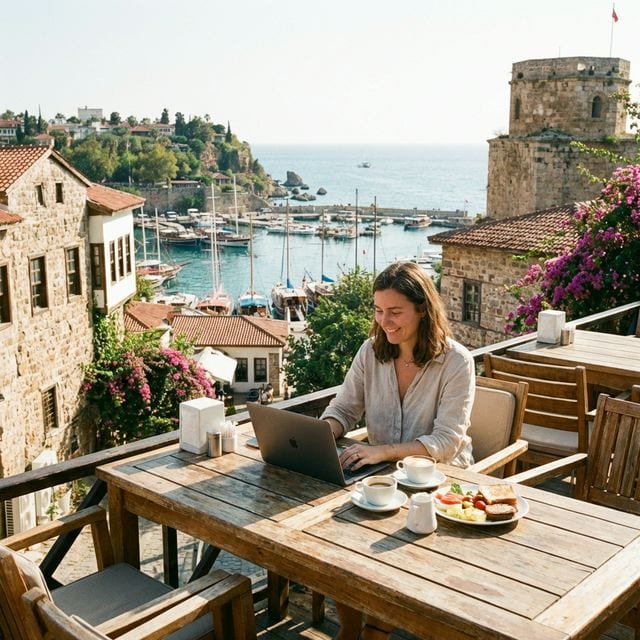
The café-working culture is, realistically, where most casual nomad work happens day to day. Seafront cafés in Konyaaltı and the city-centre café strip around Muratpaşa are well used to laptop workers, particularly outside the peak breakfast and dinner rush hours. A few etiquette notes that keep this sustainable for everyone:
- Order something roughly every 60–90 minutes if you're staying for a long working session — this is standard courtesy in busy cafés, not a strict local rule, but it matters more in high-turnover tourist-zone cafés than quieter residential ones.
- Avoid taking a table clearly meant for four during a busy lunch rush if you're working solo — many cafés genuinely don't mind laptop workers outside their peak hours but do mind losing turnover during them.
- Bring headphones for calls; open-plan Mediterranean café seating carries sound further than most people expect, and no one wants to overhear your client call.
Banking, Payments and Currency
Turkey is largely a card-friendly country in its cities — contactless payment is standard even for small purchases in Antalya's cafés, supermarkets and taxis, though carrying some cash is still useful for markets, small local shops, and dolmuş (shared minibus) fares. The Turkish lira has experienced significant volatility in recent years, which cuts both ways for a nomad earning in a stronger foreign currency: it has generally kept the cost of living attractively low relative to income earned abroad, but it also means prices in lira terms move faster than in most Western economies, so budgeting in your home currency and re-checking periodically is more useful here than in most nomad destinations.
Practical banking notes:
- Opening a Turkish bank account is possible as a foreigner and is genuinely useful for longer stays (utility payments, aidat, and some rental contracts are easier with a local IBAN), typically requiring your passport, a residence address, and often a Turkish tax number.
- Local fintech apps are widely used by both Turks and expats for everyday transfers, bill splitting and QR-code payments, and are usually easy to set up with just a phone number and ID.
- International transfer apps (the multi-currency card and transfer type of service) are the most common way nomads move money into Turkey and spend at close to the interbank exchange rate, avoiding the wider margins some traditional cards apply abroad.
- ATM withdrawals are widely available, but check your home bank's foreign withdrawal fees before relying on them as a primary cash source — a local account or fintech card is usually cheaper for regular use.
Healthcare and Insurance
Turkey, and Antalya specifically, has a genuinely large private healthcare sector built partly around international medical tourism, which has the side benefit of making high-quality private care easily accessible to long-stay foreigners. Private hospital standards in Antalya are generally strong, with English-speaking staff common in the larger private hospitals, and costs for private consultations, diagnostics and treatment are typically well below equivalent Western European or US pricing — one reason Turkey attracts patients for procedures ranging from dental work to elective surgery.
For a nomad, the practical healthcare setup usually looks like:
- Private health insurance valid in Turkey — required if you're applying for a short-term residence permit, and sensible to carry regardless given how much cheaper it is here than equivalent Western coverage. Costs vary widely by age, coverage level and provider, so treat any figure as a rough planning range and get several quotes.
- Choosing a private hospital or clinic near your neighbourhood — most central neighbourhoods (Konyaaltı, Lara, Muratpaşa) have private hospitals or clinics within a short taxi ride, and it's worth identifying one before you need it rather than during an emergency.
- Travel/medical insurance from your home country as a supplement, particularly for anything requiring evacuation coverage, which local Turkish policies don't always include.
If you're weighing broader medical tourism logistics — planned procedures rather than routine care — our Turkey medical tourism and airport transfer guide covers hospital transfers and recovery-stay logistics in more depth.
Gyms, Sports, Community and Language
Planning your trip?
Enter your exact route and vehicle type to see the current booking price before confirmation.
Staying active
Antalya's outdoor infrastructure does a lot of the work: the Konyaaltı beach promenade is a genuinely excellent running and cycling route, sea swimming is realistic from roughly May to October, and the Taurus Mountains offer hiking within a short drive (the Lycian Way's eastern sections are accessible from the wider Antalya region). For gym-based fitness, international and local chain gyms are common across the coastal neighbourhoods with monthly membership pricing that is generally lower than Western European equivalents, and most offer month-to-month options well suited to a nomad's shorter time horizon — worth confirming before committing to a longer contract if you're not sure how long you'll stay.
Building a community
The nomad and expat community in Antalya has grown steadily, concentrated mostly in the Konyaaltı and Muratpaşa areas. In practice, community forms through a fairly predictable set of channels: expat and digital nomad Facebook groups (active for everything from apartment shares to spontaneous meetups), coworking space social events for members who pay for a desk specifically to be around other remote workers, language exchange meetups pairing foreigners practising Turkish with locals practising English/German/Russian, and the simple fact that café culture here is social by default — the same seafront cafés used for work double as informal meetup spots in the evening.
Language basics
English is common in tourist-facing businesses, cafés and among younger residents in central neighbourhoods, but it thins out quickly once you're dealing with utility companies, some landlords, pharmacies outside the centre, or local government offices — this is where having a few Turkish phrases, a translation app, or a Turkish-speaking friend genuinely pays off. Learning basic greetings, numbers, and a handful of practical phrases (asking for the bill, negotiating rent, describing a symptom at a pharmacy) meaningfully smooths daily life and is generally well received — Turkish hospitality culture tends to reward even modest efforts at the language warmly.
Seasonality: When to Come and What to Expect
| Season | Months (approx.) | Weather | Crowds/rent | Best for |
|---|---|---|---|---|
| Peak summer | June–August | Hot, humid, consistently sunny | Highest tourist density and highest short-stay rents | Beach-first stays; expect busier cafés and premium pricing on short lets |
| Shoulder season | April–May, September–October | Warm, comfortable, sea still swimmable in most of this window | Noticeably calmer, better mid-term rental availability and pricing | Many nomads consider this the best overall window — good weather without peak crowding |
| Winter | November–March | Mild by Northern European standards but rainier, cooler evenings | Lowest tourist density, cheapest long-stay rents, quietest cafés | Deep-work stretches, lower cost of living, fewer distractions — though pack for rain and cooler evenings, not just sun |
Getting Around Without a Car
Most nomads based in Konyaaltı, Lara or Muratpaşa don't need a car for daily life. The tram line connects the city centre with the airport and several key districts, dolmuş (shared minibuses) cover routes the tram doesn't reach at low cost and high frequency, ride-hailing and taxi apps are widely used and reliable for late-night or luggage-heavy trips, and the coastal neighbourhoods are genuinely walkable for daily errands. For a full breakdown of tram routes, dolmuş etiquette and taxi norms, see our Antalya public transport guide.
A rental car or scooter becomes more useful if you're based in Kepez or plan frequent trips to areas like Kaş, Side or inland historical sites, but it is genuinely optional rather than necessary for a coastal-neighbourhood-based nomad life.
Arriving for a Long Stay: The Airport Run
Arriving for a stay of one month or longer usually means more luggage than a typical holiday — a second suitcase, work equipment, sometimes a folding bike or extra monitor — plus the mental load of navigating a new city on minimal sleep after a flight. This is really the only place in this guide where the practicalities of a private transfer are worth mentioning directly: a pre-booked private transfer from Antalya Airport removes the friction of finding a taxi queue, negotiating a fare in an unfamiliar currency, or fitting oversized luggage into a shared shuttle, and it gets you straight to your temporary or long-stay address without a detour. It is a small thing in the context of a months-long stay, but a smooth first hour in a new country tends to set the tone for the weeks that follow. For a full breakdown of the airport itself — terminals, arrivals process, and transport options — see our Antalya Airport (AYT) guide.
Weekend and Regional Trips
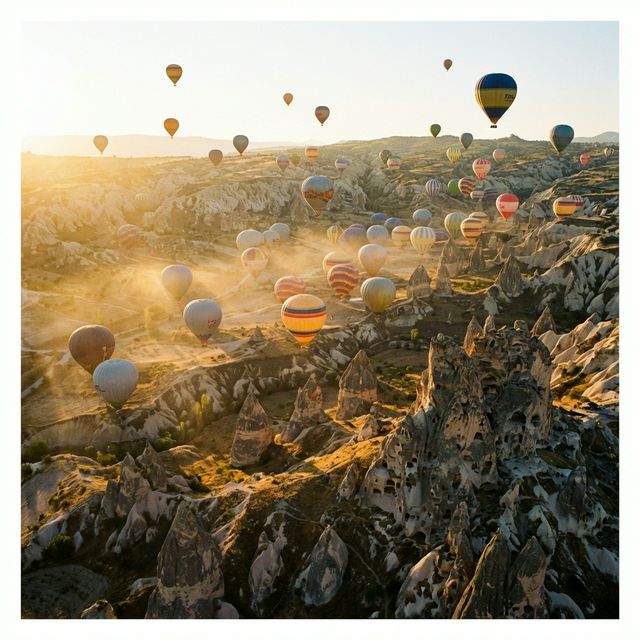
One underrated advantage of basing yourself in Antalya is how much of Turkey (and nearby countries) becomes a weekend trip rather than a major expedition. From an Antalya base, popular nomad weekend options include the fairy chimneys and balloon flights of Cappadocia, the Aegean coast around Bodrum, the ancient ruins scattered within day-trip range at Perge, Termessos and Myra, and boat charters along the coastline covered in our yacht and gulet charter guide. Antalya's direct flight network also makes short international trips to Greek islands, Cyprus or the wider region genuinely practical over a long weekend.
Planning your trip?
Enter your exact route and vehicle type to see the current booking price before confirmation.
Frequently Asked Questions
Is Antalya actually good for remote work, or is it mainly a tourist city?
Both, honestly — and that's part of the appeal. Antalya's economy is built around tourism, which means it has excellent infrastructure for short-term visitors (transport, English-speaking services, furnished housing), but it also has a genuine, growing population of long-stay expats and remote workers who have built a parallel infrastructure of coworking spaces, mid-term rentals, and community groups. Outside the peak two to three summer months, it functions well as a working base rather than just a holiday stop.
What's the best neighbourhood for a first-time digital nomad stay in Antalya?
Konyaaltı is the most commonly recommended starting point — a strong concentration of laptop-friendly cafés, a walkable seafront, modern furnished apartment stock, and reasonably easy access to the rest of the city. Muratpaşa (city centre) is a close second if maximum walkability for daily errands matters more to you than beach proximity.
How much does it cost to live in Antalya as a digital nomad?
It depends heavily on neighbourhood, apartment quality and lifestyle, and figures shift with exchange rates, so treat any number as an approximate planning range rather than a quote — get current quotes from landlords and providers directly. Generally, Antalya remains meaningfully cheaper than Lisbon and most Western European cities, while offering a more developed, walkable urban environment than budget Southeast Asian hubs.
Do I need a visa to work remotely from Antalya?
Many nationalities can enter Turkey visa-free or via e-Visa for tourism purposes and stay for a period commonly around 90 days within a rolling 180-day window, though the specific rule depends entirely on your passport — check the official e-Visa portal or our Turkey visa guide for your nationality. Tourist entry does not formally authorise local employment with a Turkish employer, but it's the basis most remote workers (working for foreign clients/employers, not local ones) use for shorter stays. For longer stays, the short-term residence permit (ikamet) is the standard formal path — this is general information, not legal advice, so confirm specifics with official sources or an immigration lawyer.
Can I stay in Antalya longer than 90 days?
Yes, via a short-term residence permit (ikamet) applied for through Turkey's Presidency of Migration Management, which generally requires a registered rental address, valid health insurance, proof of funds, and a processing period. Rules and requirements do change, so check the official e-ikamet system or consult an immigration lawyer rather than relying solely on this guide.
Will staying in Turkey a long time affect my taxes back home?
Potentially, depending on your home country's rules, how many days you spend where, and your income structure — this is genuinely case-specific and not something a general guide can safely answer for you. If you plan to spend more than a few months a year in Turkey, talk to a tax professional familiar with both jurisdictions before committing, not after.
Is the internet actually fast enough for video calls and remote desktop work?
In modern buildings across Konyaaltı, Lara, Muratpaşa and much of Kaleiçi, yes — fibre connections here are generally well suited to video calls and large file transfers. Always ask for a live speed test on the specific unit before signing a lease, and keep a local eSIM as a backup rather than assuming a listing's advertised speed reflects reality.
What's the best way to find a furnished apartment for a few months?
A combination approach works best: book a short-stay place for your first one to two weeks, browse expat and digital nomad Facebook groups and direct listing platforms for mid-term furnished options, view a shortlist in person once you're on the ground, and only then sign a longer lease. Local real estate agents can speed this up but may charge a finder's fee — confirm terms before engaging one.
What is DASK and aidat, and do I need to worry about them as a renter?
DASK is Turkey's compulsory earthquake insurance, and it's the landlord's responsibility for a rental property, not yours — just confirm it's in place. Aidat is a monthly building maintenance fee common in apartment complexes with shared amenities like a pool, lobby or security; as a renter, confirm whether it's included in your quoted rent or billed separately, since it's a common point of confusion.
Is Antalya safe for solo nomads, including women travelling or working alone?
Antalya is generally considered a safe city by regional standards, with a large international resident and tourist population contributing to well-established safety norms in the main neighbourhoods. For a fuller discussion of safety, cultural norms and recommended practices specifically for solo and female travellers, see our solo and female travel safety guide.
Do I need a car as a digital nomad based in Antalya?
Not if you base yourself in Konyaaltı, Lara or Muratpaşa — the tram, dolmuş network, and ride-hailing/taxi apps cover daily needs and airport runs comfortably. A car or scooter becomes more useful if you live further out in Kepez or want frequent access to areas outside the city, but it's genuinely optional for most coastal-neighbourhood nomad life.
What should I know about healthcare and insurance before arriving?
Private healthcare in Antalya is generally high quality and notably cheaper than Western Europe or the US, partly thanks to the region's medical tourism industry, but you should still carry private health insurance valid in Turkey — it's required for a residence permit application and sensible regardless. Costs vary by age, coverage and provider, so get several quotes rather than budgeting off a single figure.
Is Antalya too touristy and seasonal to feel like a "real" place to live?
It can feel that way in Kaleiçi and the resort clusters during peak July–August weeks, but Muratpaşa, Kepez and much of Konyaaltı and Lara function as genuine, year-round residential neighbourhoods with local schools, markets, pharmacies and a settled population well beyond the tourist season. Shoulder season and winter, in particular, feel like a normal mid-sized coastal city rather than a resort town.
---
This guide provides general, non-binding information current as of 2026 for planning purposes. Visa, residence, tax and insurance rules can change and vary by nationality — always confirm current requirements with official Turkish government sources or a licensed professional before making decisions. Arriving for a long stay and want the first hour sorted before you land? A private, pre-booked Antalya Airport transfer gets you and your luggage straight to your apartment without a taxi queue or fare negotiation.
Planning your trip?
Enter your exact route and vehicle type to see the current booking price before confirmation.